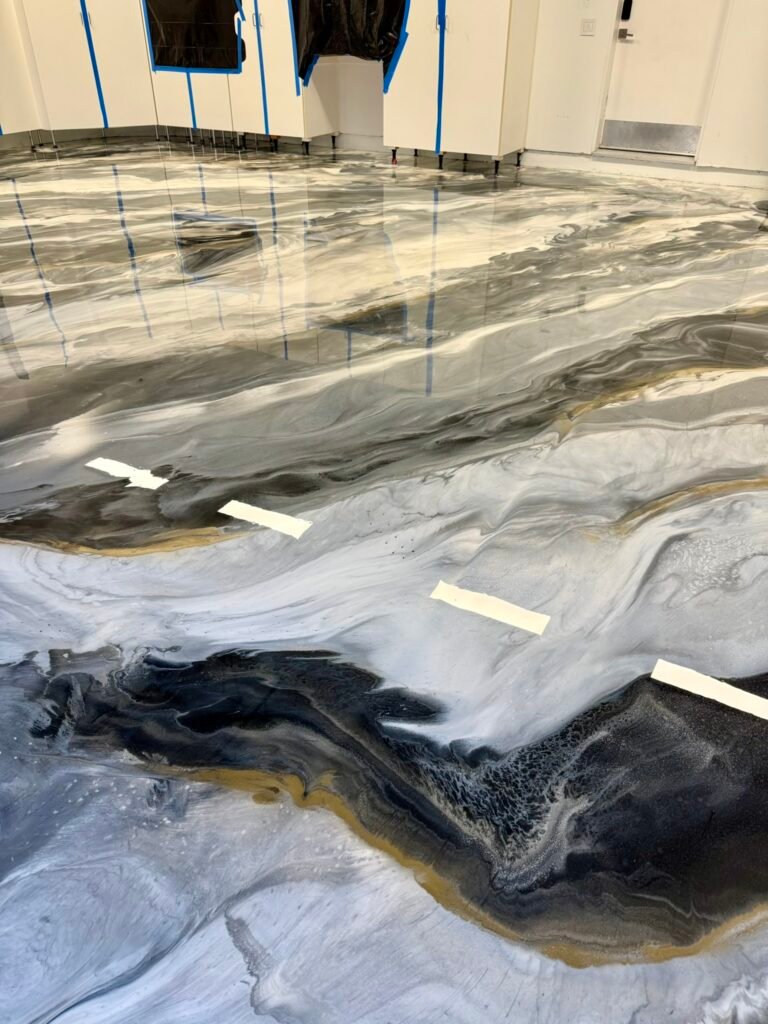
Yes. In most of San Diego County, fall and winter are good times to install a garage floor coating, as long as the installer matches the coating to the temperature and checks the slab for moisture first.
Our winters are mild compared to most of the country, but inland areas like Ramona, Poway and Escondido still get cold nights and a few weeks of real rain. Those two things decide whether a coating cures properly or starts peeling a year later. Here’s what actually matters, so you can book with confidence instead of waiting for spring.
What temperature is too cold for a garage floor coating?
For standard epoxy, the concrete should be at least 55°F, and the air shouldn’t drop below 50°F during the first 24 hours of cure. Polyaspartic coatings are far more forgiving and can be installed on slabs from about 35°F up to 95°F.
The number that matters most is the slab temperature, not the weather app. Concrete holds the cold from overnight lows, so it’s usually colder than the air above it. In Ramona, December nights average in the upper 30s to low 40s, while afternoons reach the mid 60s. A comfortable 65°F afternoon can easily sit on a slab that’s still in the low 50s.
That’s why cool-weather timing comes down to the coating:
- Epoxy cures slowly below about 50°F, and most epoxies not made for cold weather never fully cure below that. A coating that hasn’t fully cured is softer and more likely to scratch, stain or lift.
- Polyaspartic keeps curing in cool conditions, which is one reason it’s a popular choice for fall and winter installs, and for topcoats in general.
In coastal San Diego, slabs rarely get cold enough to matter. Inland, a good installer checks the slab with an infrared thermometer and the overnight forecast before deciding whichsystem to use and when to start.
Does San Diego’s rainy season affect garage floor coatings?
It can, but only if moisture gets ignored. Rain itself isn’t the problem inside a garage. Damp concrete, condensation and moisture rising through the slab are.
Most of San Diego’s rain falls between December and February, and three moisture checks matter during those months:
- The surface has to be dry. Water tracked in from a wet driveway or an open garage door can keep the slab damp. A coating applied over damp concrete won’t bond properly.
- The slab has to stay above the dew point. Cold concrete “sweats” when the air is humid, sometimes without any visible water. The industry rule is that the slab should be at least 5°F above the dew point for the whole cure, and most installers avoid coating when humidity is above about 85%.
- Moisture can’t be pushing up from below. Concrete is porous, and ground moisture can travel up through it and lift a coating from underneath. This is a bigger risk in older homes, which is why we run a moisture test on every home built before 2005.
None of this rules out a winter install. It just means a good installer schedules around storms and confirms the slab is dry before any product goes down.
How long does a garage floor coating take to cure in cooler weather?
Most of our garage projects are finished in 1 to 3 days. Light foot traffic is usually fine within 24 hours, and you can typically park on the floor in 48 to 72 hours.
Cooler weather can stretch the curing stage, especially with epoxy. Chemical reactions slow down as temperatures drop, so an epoxy layer that cures quickly on a warm day can take most of a day at 50°F. Full hardness also takes longer than the time to walk on it. Coatings keep strengthening for about a week after install.
What that means for you in fall and winter:
- Plan to park in the driveway for a few days, and possibly one extra day on a cold week.
- Keep the garage door closed overnight during the cure to hold in warmth.
- Avoid dragging heavy items or rolling tool chests across the floor for the first week.
Why fall and winter can be a smart time to coat your garage
For many San Diego homeowners, fall is actually the easiest time to get it done. Here’s why:
- Easier scheduling. Spring and summer are the busiest months for garage coatings. Booking in fall or winter usually means a shorter wait and more choice of dates.
- Friendlier temperatures. Summer heat in inland San Diego can push slab temperatures high and shorten the time installers have to work the material. Moderate fall days are often easier on the coating.
- Ready for the holidays. A finished floor is easier to clean, looks better when guests arrive, and makes a big difference if the garage doubles as a gym, workshop or holiday storage space.
- Ready before spring projects. If you’re planning to organize the garage, add cabinets or start a new project in spring, it’s best to have the floor done first.
How we handle cool-weather installs at Zenith Heights
Every project starts with a free onsite estimate, and in fall and winter that visit does more than measure the garage:
- We check your slab’s condition, including cracks, old sealers and stains that change how the floor needs to be prepped.
- We test for moisture on every home built before 2005.
- We check slab temperature and the forecast before picking an install date.
- We match the system to the conditions, using 100% solids epoxy and polyaspartic coatings depending on what your floor and the weather call for.
- We schedule around rain, so your floor goes down on a dry slab.
Zenith Heights Flooring & Epoxy is veteran-owned and family-owned, licensed and insured (CA Lic. C-15 #1137024), and based in Ramona, serving all of San Diego County.
Thinking about getting your garage done this season? Book a free onsite estimate and ask about our current fall savings. Call (619) 727-9066 or request your estimate online.
Frequently Asked Questions
Is it too cold to coat a garage floor in San Diego in winter?
Usually not. Coastal slabs rarely get too cold. Inland areas like Ramona can have cold slabs on winter mornings, so installers check the slab temperature and may use a polyaspartic system, which cures down to about 35°F.
Can you install a garage floor coating when it’s raining?
Yes, as long as the slab inside the garage is completely dry and stays above the dew point. Installers avoid coating a slab that’s damp from tracked-in water or humid, rainy air.
How long before I can park on my garage floor after a winter install?
Typically 48 to 72 hours. In colder weather, epoxy layers can cure more slowly, so allow an extra day if your installer recommends it.
Is polyaspartic better than epoxy in cold weather?
Polyaspartic is more forgiving in cool temperatures and keeps curing when standard epoxy would slow down or stall. Many systems combine both: an epoxy base for build and bond, with a polyaspartic topcoat.
Is fall a good time to coat a garage floor in San Diego?
Yes. Temperatures are moderate, schedules are more open than in spring and summer, and your floor is finished before the holidays.